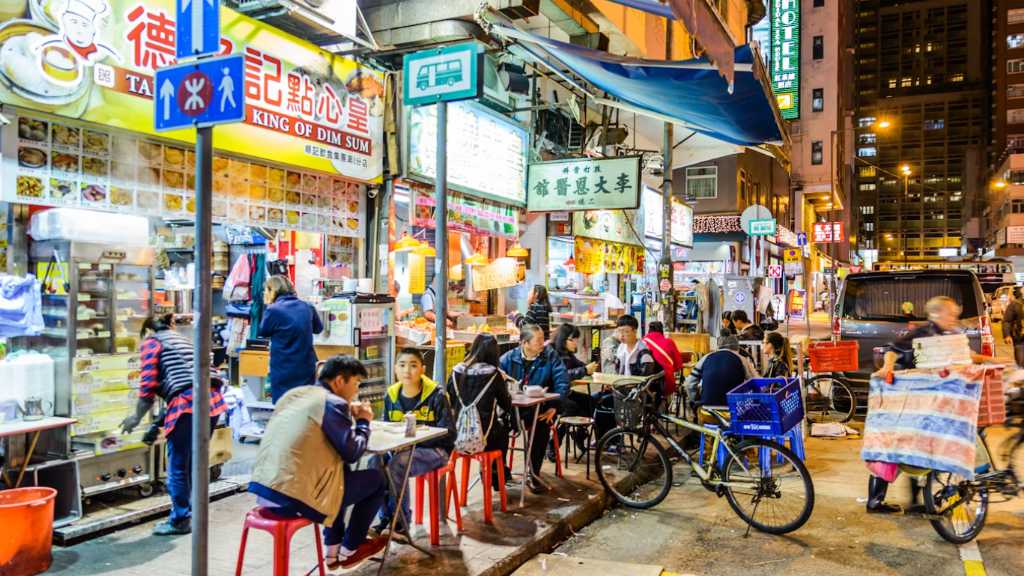
Ah, Hong Kong, or as it became later known after the 1997 handover “Xianggang”. The name means ‘Fragrant Harbor’ although as Pierce Brosnan was famously advised in the TV series ‘Taipan’ (a loose description of the rise of the Swire colonial trading house) when confronted with the stench of the then Kai Tak airport – ‘that’s the smell of money’.
My early days did involve flying into Kai Tak and for many years afterwards, and unreplaceable, unique, memorable years leading up to that very handover. I arrived in Hong Kong a few years earlier and began my erstwhile Asia career as a commodities broker selling Philippines coconuts, before gravitating back to my original path as a lawyer, via a couple of stints at local firms. Two of my ex-bosses were later played in a film about their adventures by Javier Bardem and Nicholas Cage.
Another ex-boss in a different legal firm told me when I wanted to resign and set up my own business “Don’t go to China Chris. It’s dirty, nothing works, its communist, and they’ll rip you off.” He was right of course, but crucially, not to any fatal degree – as I was ultimately to find out. China, in contrast, made me as a man.
But back to Hong Hong, Dezan Shira & Associates began life in 1992, in serviced offices on Queens Road Central before realising that even Central was becoming obsolete and I needed to be based on the ‘mainland’ – that meaning pre-handover Tsimshatsui. Our first office there was on Ashley Road, which incredibly, used to be seafront. The harbour even today is not so far away – Ocean Terminal now is just 100 metres distant across what is now the reclaimed land of Canton Road, and remains the docking port for Cruise Ships and China Ferries.
So Xianggang and I have history.
The pre-1997 period was a really interesting era to be in the city, almost a constant party, with a mixture of the inevitability of the Chinese, a fear of the ‘yellow peril’ caught up in the most hedonistic, decadent capitalist behavior. I am not kidding when I say that porn movies were displayed on small tv screens above the men’s urinals n one popular bar. Large-breasted Filipino’s and Vietnamese girls danced topless at Go-Go bars in Wanchai. Nightclubs such as Joe Banana’s, The Wanch, and yes ‘Park 97’ were in constant motion as if entire Friday and Saturday nights were extended over the complete week. One of Dezan Shira’s early offices was around the corner from ‘Bottom’s Up’ – a famous go-go bar that featured in the James Bond film ‘The Man With The Golden Gun’. Famously, that had originally been established to provide R&R services to mainly American troops taking leave from the war in Vietnam. By the time I turned up, the original girls were still there, now in their 50’s and 60’s. Old GI boyfriends still occasionally turned up.
Amongst all this hubris, and despite the unknown that China was very definitely coming to Hong Kong, I decided – wisely – to embrace that. Others felt it spelled doom. I didn’t.
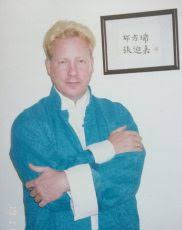
The Shekou, Shenzhen Connection
Things has inevitably changed since the early 1990’s, but a key development at that time was China’s decision to make the Shenzhen city region, which included the port of Shekou and as far north as the airport, into a ‘Special Administrative Region’ (SAR). With the handover of Hong Kong too the mainland pending, the idea was to create a mainland China zone around Hong Kong, and to embrace Hong Kong’s style of capitalism on the mainland to see what would happen. If it failed, the SAR was cordoned off from the rest of China so any errant ‘capitalist’ trends could be contained. It also meant that one could easily obtain a visa to visit Shenzhen – but not the rest of mainland China. The same applied to mainland Chinese – they had to obtain a special permission to be able to travel to Shenzhen. This created a decade long ‘bubble’ where trade and commerce between Hong Kong and Shenzhen grew exponentially – the forerunner of what is now the ‘Greater Bay Area’ of southern China involving several cities. With direct ferries running between Hong Kong and Shekou, and visas easy to obtain, I began to visit this part of China on a very regular basis – often making the journey for the weekends.
The differences were palpable. While in Hong Kong, most expats, while partying, were still afraid of 1997 and of China. Most never visited, nor wanted to. But in Shekou, and Shenzhen, the places were full of expats – mainly in the energy and services sectors, and often pretty hardened expat veterans with experience of tough previous assignments. Its forgotten today but a lot of the very early expats in China had been parachuted in from postings in Nigeria, and other tough regions. To them, Shenzhen was a holiday camp in comparison. Expat bars inevitably sprang up but with an ‘embrace China’ attitude rather than a fear of what post 1997 would bring. I found it refreshing.
Shekou also helped me obtain Dezan Shira’s first-ever client – a China trademark for an expatriate pub called the Red Rooster. Tom, the owner, has asked me if I could assist, which I did. I suspect he thought I might not deliver, but he gave me a chance anyway. The great thing about doing business with outlets like that is that everyone knows the owner. When regular customers turned up at the Red Rooster for a pint, they’d ask Tom “How did Chris do with your trademark?” It had taken 18 months to get that first piece of Dezan Shira work. With Tom’s endorsements ringing in his customers ears, it took just 3 weeks to get my next assignment – setting up a Representative Office for a large American oil exploration company. Dezan Shira & Associates were up and running.
A notable early client in Shenzhen proved to be Liam Casey and PCH International, whose registration procedures I personally handled. We provided legal and tax advice for several years, as well as gave them their first recruits. PCH developed into a US$1 billion turnover business, however that success was based, at least in part, on the structural advice we originally gave them. Little acorns can indeed grow into Mighty Oaks. Both Hong Kong and Shenzhen were crucial to my developing Dezan Shira & Associates in what eventually became a pan-Asian firm.
I still visit Hong Kong on a regular basis – my favourite tailor is based in the city, while I always enjoy the fantastic restaurants and taking trips out to the islands – I lived on Lamma for several years and used to commute to work on the 7am ferry…but those are tales for another time.
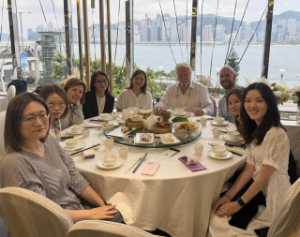
Meanwhile, although our Hong Kong office was never especially large – it handled mostly local company registrations and administration, while all the heavy lifting was done by our offices in mainland China – I have always appreciated the Dim Sum lunches with the staff, overlooking Victoria Harbour, and they treated me to an especially good one as I bid farewell to the company – but not to the city. 多謝你!