Tchaikovsky At Beijing’s Egg

by Chris Devonshire-Ellis


October 10th, 2011


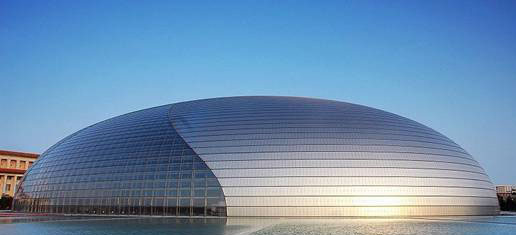
China’s National Holiday week pretty much coincides with the start of the Opera and Classical Music season, which is good news as most venues with a decent opera house or concert theatre usually begin the season with something of an extravaganza. I’ve spent this past week in Beijing (which is where I’m based, although I travel a lot, so it’s nice to be at home for over a week at any one time) which has a somewhat controversial, but nonetheless quite spectacular national theater just to the West of Tiananmen Square. In true Communist style, its officially named the rather pragmatic and tedious “National Center for The Performing Arts”, but to locals it is simply referred to as “The Egg”. Strangely enough, the architect responsible had intended to portray a Pearl – and it does look like one when lit up at night – but the oval, rather than round shape has changed the way it is perceived. Beijingers, not known for their romanticism, and being somewhat loathe to indulge in plaudits, dubbed it alternatively, and the name has stuck.    
 

(more…)

An Achiltibuie Summer – Coigach Explored

by Chris Devonshire-Ellis


August 19th, 2011


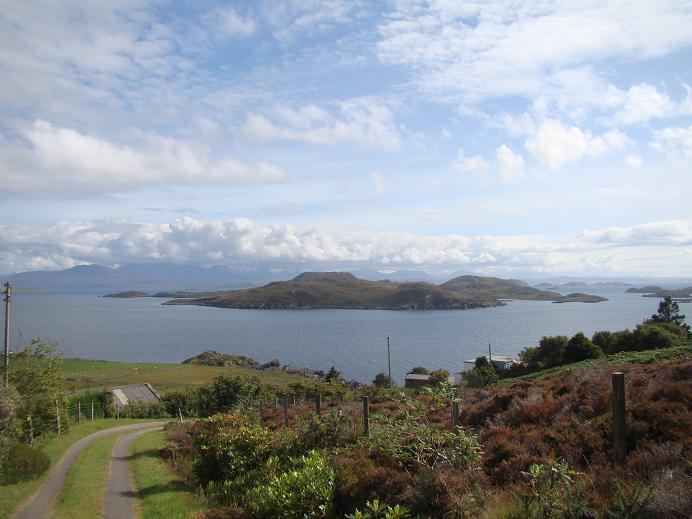
The Summer Isles from Achiltibuie


Being a Baron of somewhere means taking responsibility – and having been assigned the Barony of Coigach it seemed only right to spend much of August there. The Coigach Pensinsula lies to the north and west of Ullapool in the North-West Highlands of Scotland, extends to the south of Lochinver and takes in everything inbetween. That includes most of the Summer Isles, which is probably one of the most beautiful spots in the United Kingdom.  I stay at the Polbain end of a small village called Achiltibuie, which goes back as a settlement for centuries and overlooks much of the Isles. In days gone it was mainly crofting, sheep rearing, with some fishing on the side. In fact local pirates used the Isles as a base from which to attack occasional merchant ships, and there used to be a herring fishery on the main island of Tamera Mor.


(more…)

A Mongolian Retreat

by Chris Devonshire-Ellis


August 18th, 2011


One of the things about running a business with numerous offices across China, India and elsewhere in Asia is that it’s almost impossible to escape the huge numbers of people. Heaving masses of humanity – the great unwashed – in both China and India can, after a while, leave ones inner peace somewhat frayed around the edges. Also, as I intend to spend more time writing over the next few years, I need somewhere quiet. No dogs barking, no telephones ringing, and no constant traffic hum in the background. 

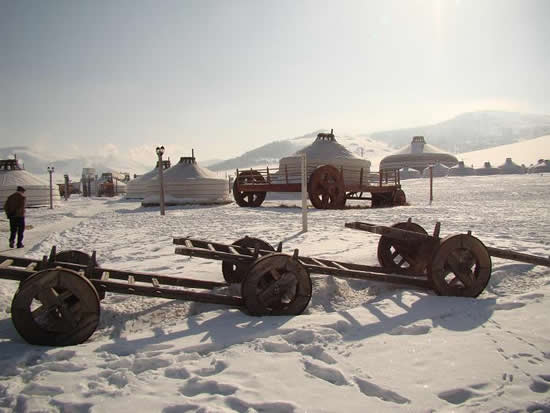
Step forward then, Mongolia. As I’m based in Beijing, it’s only a 90 minute flight to the capital, Ulaan Baatar, and has a population of just 2.8 million in an area three times the size of France. There are six horses to each Mongolian national, and about 35 sheep. From UB I can get out into the wilds of the Gobi Desert, or the hills of Terelj in about 45 minutes, accompanied only by Golden Eagles and the enormous sky. Consequently, last year I invested the princely sum of USD78,000 to purchase a third floor apartment from a German expat. It’s sited in prime location just 5 minutes walk from Sukhbaatar Square (Mongolia’s version of Tiananmen) and was built I understand by Chinese engineers back in the late 1950’s. Solid as a cave, with walls two feet thick, it needed a bit of work doing to it – and that’s what I’ve spent much of the past year involved with.  That said, the work that needed doing turned out to be rather more than I had envisaged.

(more…)

The Choijid Tara – A Mongolian Ballet Masterpiece

by Chris Devonshire-Ellis


June 2nd, 2011


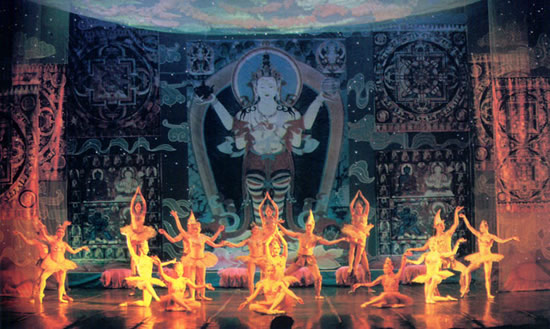
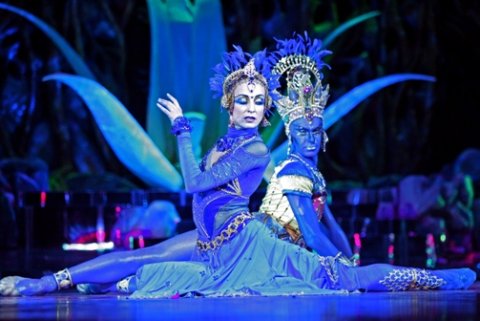
The Choijid Tara (“Buddhist Goddess”) is a revered figure in Mongolian Buddhism, and a production of a new contemporary ballet for the State National Ballet of Mongolia – it’s first in over fifty years – has delivered a contemporary masterpiece. Based upon the Buddhist story of the young girl Choijid, this completely new commission, to music by Mongolian composer E. Choidog, scored for Western orchestra, and with choreography by B. Jamyandagva (libretto by Sh. Surenjav) represents the essential Buddhist beliefs of this deeply religious country, and provides what may well be the only Buddhist ballet currently in performance. As a devotee of Les Ballets Russe, I am always mindful of Serge Diaghilev’s famous words to new works by composers and choreographers – ‘Astonish Me!” The ballet Choijid Tara has astonishment, beauty and drama that really I felt was up there with the best of Stravinsky’s marriage of music to movement. Russian trained Jamyandagya himself is Mongolia’s first ballet master and the Father of contemporary ballet in the country today.

(more…)

Assigned Barony of Coigach

by Chris Devonshire-Ellis


May 26th, 2011


It’s not everyday one becomes titled; and certainly not to a title that has existed for 500 years. Yet that is exactly what has happened, I’ve just been assigned the Barony of Coigach from the Earl Cromatie in the Scottish Western Highlands. Coigach itself is an estate of some 145,000 acres, with the Barony being created in June 1511. The assignation has been completed with the Scottish Barony Register and accepted by the Lord Lyon, the Queen’s representative for Scotland. Next step is I need to apply for a new coat of arms – these are granted to individuals so I cannot inherit the previous one. To that end I have employed the services of a heraldic expert in Edinburgh to assist with the design; it’s quite an art. Heraldry has specific rules over what can and cannot be displayed, and they should identify the individual. They also have to be submitted to the Lord Lyon for approval, who if successful will enter the arms into the Scottish heraldic registry. I’m working on this project now – rather different from the usual contract reviews and spreadsheets I have to evaluate !

(more…)

The Return Of Les Ballets Russe

by Chris Devonshire-Ellis


May 4th, 2011


Les Saisons Russes du XXI Siecle (The Russian Season in the 21st century) is a ballet programme and tribute to Serge Diaghilev’s Ballet Russe, which for twenty years in its original format between the two world wars held the social season in London, Paris, Monte Carlo and other cities in its thrall. Bringing together the best of the Russian immigres fleeing the Bolshevik revolution, it introduced the classicism of Russian Court ballets to the new and avant garde. Ballet stars whose names still reverberate today –  Nijinsky, Balanchine, Fokine, Pavlova, along with set designers including Salvador Dali, Jose Miro, Leon Bakst & Pablo Picasso, mixed in with a dash of Coco Chanel, Natalia Goncharova and Henri Matisse. And that is without mentioning the music, often specifically commissioned. Stravinsky, Prokofiev, Debussy & Ravel, plus many others. Stravinsky’s works with the Ballet Russe especially are now considered genius – Firebird, The Rite of Spring are still in the repertoire today. 

The Ballet Russe closed in 1929 when Diaghilev died suddenly, and although a whole host of revivals, most notably “Les Ballets Russe De Monte Carlo” kept the name burning, by the Second World War it was all over. No films were ever shot of the performances – Diaghilev had forbidden this – and in the chaos of war much of the material such as choreographic notes, costumes and sets were lost. Les Ballet Russe, it seemed, was lost to remain a memory and faded programmes. Step forward, however, Andris Liepa, a world ballet star and son of one of Diaghilev’s choreographers Maris Liepa. In research that has taken over 20 years, lost ballets have been painstakingly recreated from old reviews, photographs and from interviews taken from the few remaining dancers still alive, many of them now in their nineties. Where gaps in the choreography have remained, this have been filled in with new work by Liepa and Jurius Smoriginas.

(more…)
Gergiev Conducting Turandot at La Scala

by Chris Devonshire-Ellis


April 11th, 2011


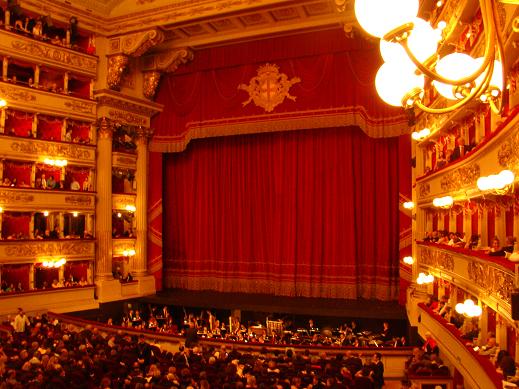
My Spring Europe / India tour is underway, with speaking business engagements in several cities over the next four weeks. However, I also try and coordinate these with cultural activities, and just this next week alone I’ll be taking in two operas and seven ballets between Milan and London. Russia of course rules the roost as my preferred theatrical style, yet with an Italian wife and living in Beijing, a trio of Valery Gergiev conducting at La Scala in a Premiere, new performance of Puccini’s “Turandot” – set of course in the Forbidden City – cannot be missed. Gergiev of course is the Russian Maestro almost single handedly responsible for dragging Russian culture out of its Cold War prison and back into the international repertory, which is partly the reason why once again the likes of Tchaikovsky, Prokofiev, Rimsky-Korsakov and the enfant terribles of Stravinsky and Shostakovich can still be often heard today.

(more…)

Celebrating Nowruz, the Kazak First Day Of Spring

by Chris Devonshire-Ellis


April 6th, 2011


Mongolia has always had a sizable ethnic Kazak population – after all it shares a long western border with the country. This meeting of nations brings Islam to Mongolia, which is why in the far west in places such as Bayan Olgi you’ll find Mosques. The Kazaks have different traditions too – even their Gers (Yurt in Kazak) have slightly different appearance. Nomads like the Mongolians, they do however favor the use of eagles in hunting, and an annual eagle festival is held each autumn in Bayan Olgi. Today though I am in Ulaan Baatar, looking after my property development, and on March 22nd the Kazaks celebrate Nowruz – the first day of spring.

(more…)

Gergiev At The Suntory, Tokyo

by Chris Devonshire-Ellis


April 1st, 2011


Nowadays I tend to plan my business trips around operatic performances, and especially when the opportunity arises to catch Valery Gergiev conduct the Marrinsky Orchestra. Whenever he and they are in Asia – we go, that’s the rule. It’s a great way to get some unexpected trips, but as maestros such as Gergiev are booked out months in advance, it’s also possible to plan trips to coincide. In October, for example, I’ll be having business meetings in the day in New York, while shuffling off to see a week’s worth of Tchaikovsky symphonies at the Barbican every night. That’s the way to combine business with pleasure in my opinion. Fortunately, Tokyo is not so far from Beijing, so it was an early spring that greeted us – although we did manage to catch on day two the worst snowfall in the city for ten years. Tokyo in snow is also a sight to behold, and we took the opportunity to take shelter in a number of tiny sake bars on the way home.

(more…)

The RAF Club, London

by Chris Devonshire-Ellis


February 7th, 2011


One of the pleasures of London is clubland, where I am fortunate to belong to through my long standing membership of the Royal Overseas League. Founded in 1910, the ROSL celebrated its 100th anniversary last year, and it has long been a stalwart for expatriates returning to the UK after postings abroad. In those days, being an expat meant a serious commitment – to the Far East, where I am (Beijing) would be a three month voyage just to arrive. Clubs such as ROSL, granted Royal Charter by King George V in 1916 and continued by every British Monarch since; provide a home from home in the center of London, ideal for when I do return back to Albion. While others may book the Hilton, or even the Ritz or Mandarin Oriental, ROSL is sited bang on St. James Park, and provides accommodation, an excellent bar, reading rooms, a library and two very good restaurants all for a fraction of the price of commercial establishments. Only open to members, I can relax away from the commercialization of staying in an hotel, and potter about as if in a very grand stately home of my own. It’s also within walking distance of Covent Garden, Piccadilly Circus, Harrods, the great museums of South Kensington  and Jermyn Street, home to tailors and hatters since the 1600’s. That’s all well and good while I live it up as a Lord, however the best kept secret of London club memberships are the reciprocal arrangements.

(more…)