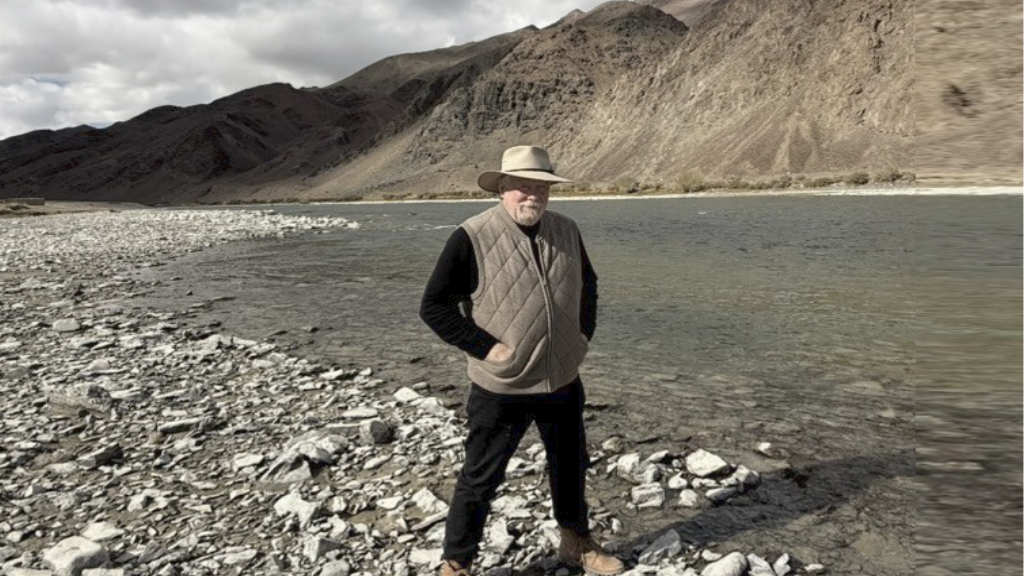
As we head farther north in Mongolia, and towards the border with Kazakhstan, we still follow the River Khovd however the ethnicity begins to change from Mongolian in Khovd to distinctly more Kazakh. For this reason – a clash of many differences, Nomadic vs Pastoral, Buddhist vs Islam, Vodka vs Abstinence, and the conquered vs the conquering – and is reflected in the clothing as well as the food.
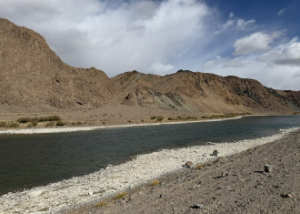
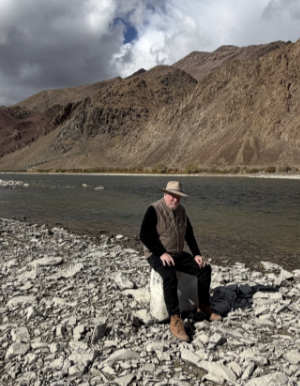
However, I know well that there will be fish in the fast running River Khovd along the route, and we stop off at a secluded part of River about 80km north of Khovd itself for lunch and a spot of fishing. The late September weather is perfect, and the River looks promising.
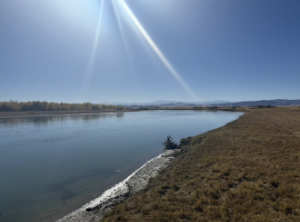
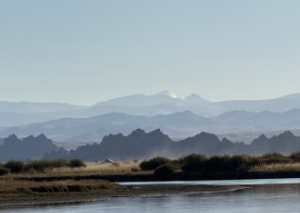
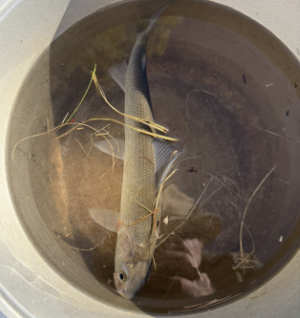
It is however, eerily quiet – the silence of Autumn as the birds have now left for warmer climates – some as far away as Australia – and the only sounds are the ‘Krak krak’ complaining of a couple of resident Magpies. A small Greyling is reeled in – the only success in 3 hours trying, however it is too small and is released back into the River.
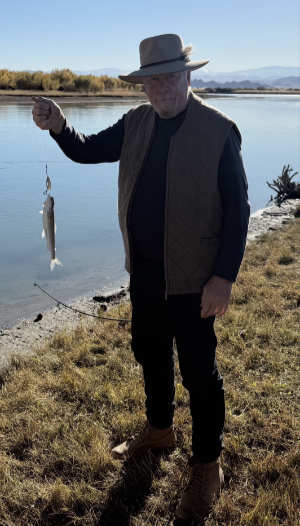
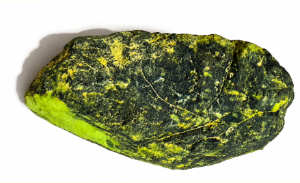
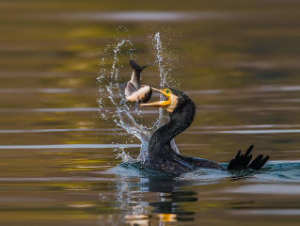
We hit the road again, heading farther north, and stop off again at another promising stretch of the River, but again there is very little productivity. I spot a Cormorant attending to River duties – meaning there are fish here, but not for Devonshire-Ellis’s. I do however notice fragments of crystallised rock all along the river-bank and note how high the white mud line has been. In the spring this river must become a huge, violent, crashing torrent. The rock, I find out, is a type of granite with a green aventurine quartz encrustment. I note some of the hills here have a distinct greenish tinge, always the signs of copper deposits.
I fish up and down the river here but am getting no luck. The Cormorant, meanwhile, seems fat, and mocks me, flying up and down the river. I ponder that this bird is undoubtedly a better fisher than any man – not for nothing are they used to catch fish in the River Li near Guilin, China, several thousand kilometers south east. The local fishermen there place a ring around the birds neck (to stop it swallowing) and attach the bird to a long piece of string. They dive overboard from the flimsy bamboo raft and come back with a fish, which is then given a morsel. I have eaten a tasty carp caught in this fashion. I return, empty handed and tell my colleagues that ‘my cormorant was too wild’. They think me weird.
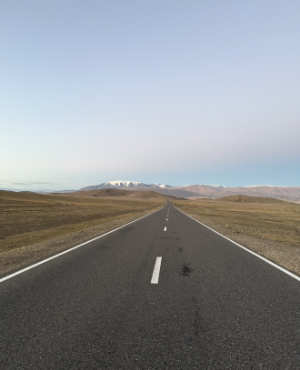
Instead, we play a game millenia old. I place a small rock on top of a larger one and we take turns from ten yards to throw stones at it until we knock it off. I win, which makes me feel better about the fishing. As the sun starts to weaken, we continue further north as the road stretches out into the distance.
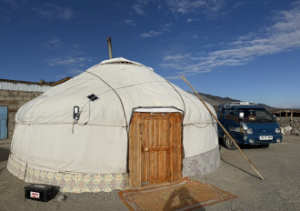
We eventually reach our destination – a Kazakh nomadic family have agreed to let us stay the night in their guest Yurt, just 20km outside Bayan-Olgii. These felt lined nomadic tents are known as a ‘Ger’ in Mongolian, but ‘Yurt’ in Kazakh. The Mongolians can be somewhat miffed if you refer to it in the wrong word, there is noticeable border rivalry here this far west. However, there are subtle differences between the two. The Yurt’s chimney opening is wider, and the roof struts are painted blue, resembling the sky. In a Ger, these are always orange, representing the rays of the sun.
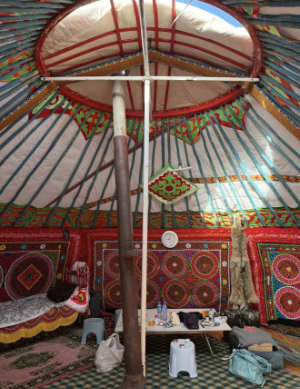
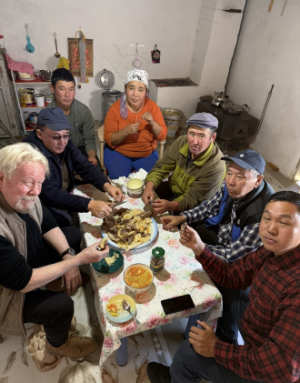
That evening we are invited in for a huge meal with the family. Being Kazakh’s, and Muslim, there is no alcohol but no-one objects when we open a few beers – having asked beforehand. Dinner is a Kazakh speciality – boiled horse meat, always recognisable by the bright orange fat the animal produces. It is cooked with potatoes and root vegetables and is utterly delicious. Like the Mongolians, the nomadic Kazakhs eschew fish – they need to bulk up for the coming harsh winter and fish doesn’t have the right fats. Not that I was going to be having any fish tonight anyway.
The next morning, we are off to see a private display of eagle hunting with lessons provided by our host.
The morning is bright and clear as we drive a few kilometers out of town to a rugged, barren region. This is high altitude desert and part of the remnants of the Altai mountains as it descends into utter wilderness. Our Father and son hosts have dressed up for the occasion and are in full costume. It is also practice for them – the Eagle Festival is just two days away. The videos tell their own story as to what happened next….