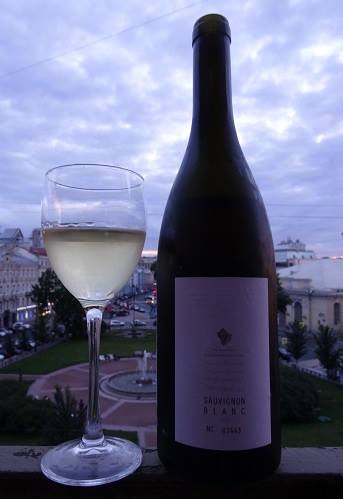
 Russian President Vladimir Putin’s Vineyard, Chateau Divnomorskoe, is on the Black Sea, and produces some of Russia’s best, most expensive, and hard to obtain wines. Fortunately I live a block down from St. Petersburg’s oldest and most exclusive wine merchants. This is the 2012 Sauvignon Blanc. Expensive means USD50 a bottle – about 2x the going rate for a decent Russian wine. So what’s it like? Well – excellent. And for fifty bucks better value than many European wines. It’s… dry enough, yet with peaches and almonds, and an excellent wine for fish (salmon is on the grill) or for a late summer evenings tipple. You have to hand it to Tsars, they really do know how to get a lot of things right. Can you imagine Chateau Merkel or Obama? Russian Wines have been doing very well in European competitions recently as well, with Chateau Divnomorskoe winning several awards at a number of competitions
(more…)
Stolichnaya’s new Salted Karamel Vodka
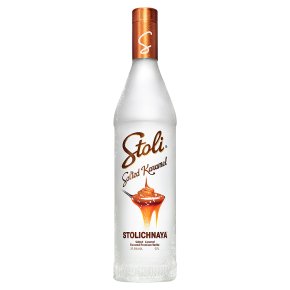 Stolichnaya is one of the great Russian brands – everyone knows it. Although it has its roots in the Imperial era “Moscow State Wine Warehouse #1“, now better known as the Cristall Distillery, Stolichnaya as a brand didn’t make an entrance until 1938. Rather brilliantly, almost immediately after making its debut, the warehouse was requisitioned during war time and converted to making industrial strength alcohol, turning out millions of bottles of “Molotov Cocktails” to throw at the Germans. Post war, production returned to vodka and the Stolichnaya brand really began to take off as a Soviet Union primary product, a position it retains today. Part of its success is the fact the distillery was based in Moscow – the capital is reputed to have the best waters for distilling grain – and after holding a personal tasting test of various Russian vodkas sourced from all over the country I am inclined to agree. For me, the strength of Stolichnaya is its slightly oily quality, it has a viscosity not found in other vodkas, and I enjoy that. Today, the brand is subject to a somewhat complicated ownership dispute, actually resulting in two variants being of the market – one branded as Stolichanaya, which is owned by the Russian state (FKP) and distilled in Russia, while the other brand “Stoli” is owned by a Russian private group (SPI) and distilled in Latvia. The dispute over who is the ‘real’ Stolichnaya continues.
Russian Abrau Durso & Nevy Svet Champagnes
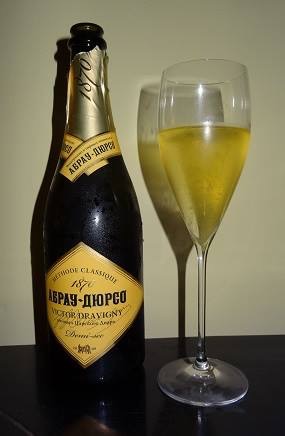 Ok, Ok, I know its not Champagne if it’s not from Epernay, France, but these vineyards have so much in common with the Champagne region they practically share the same DNA. Abrau Durso was created at the insistence of Tsar Alexander II in 1870, and thus has very strong imperial connections. The Russian Royal Family had developed a great love for Champagne, and especially Cliquot, whose famous Widow had specifically targeted the Russian market and had for years shipped bottles for consumption to the Russian court. Unlike the British, who preferred their fizz to be dry (hence the name “Brut” – a play on the French declaring this to be a ‘brutish’ way to be appreciating their precious wines) the Russians preferred sweet, or demi-sec (semi-sweet) wines. Madame Cliquot supplied the demand for many years until the Tsar decided it would be appropriate (and presumably to enjoy even more of the stuff) if Russia could make its own. He dispatched loyal courtier Prince Lev Golitsyn (who must have thought it the most excellent Russian royal command ever) to oversee the project, and in collaboration with Feodor Geiduk, an agricultural expert, decided upon a small, rugged valley about 20 kilometers north of Novorossiysk. Abrau Durso is named after two streams, the Abrau that forms a small, natural lake (the largest in the North Caucasus) and the Durso, which falls to the Black Sea two kilometers distant. The first grapes were planted in 1896 and included Riesling, Portugieser, Aligote, Sauvignon, Saperavi, and Muscat.
(more…)
The Devonshire-Ellis, John Brown & Co; and Imperial Russian Connection
![image[1]](https://www.chrisdevonshire-ellis.com/wp-content/uploads/2016/07/image1.jpg) In years gone by, the Devonshire-Ellis family built ships, owning the John Brown & Co shipyards.
In years gone by, the Devonshire-Ellis family built ships, owning the John Brown & Co shipyards.
From these yards came many historic vessels, amongst them HMS Hood, the Luistania, Queen Mary, QE2 and the Royal Yacht Britannia. The British Admiralty and Cunard were major clients, but what is less well known is that unlike their competitors, John Brown & Co would also provide technologies and supervise the building of vessels to overseas shipyards – an early form of technology transfer.
(more…)
The Dacha Life near Minsk
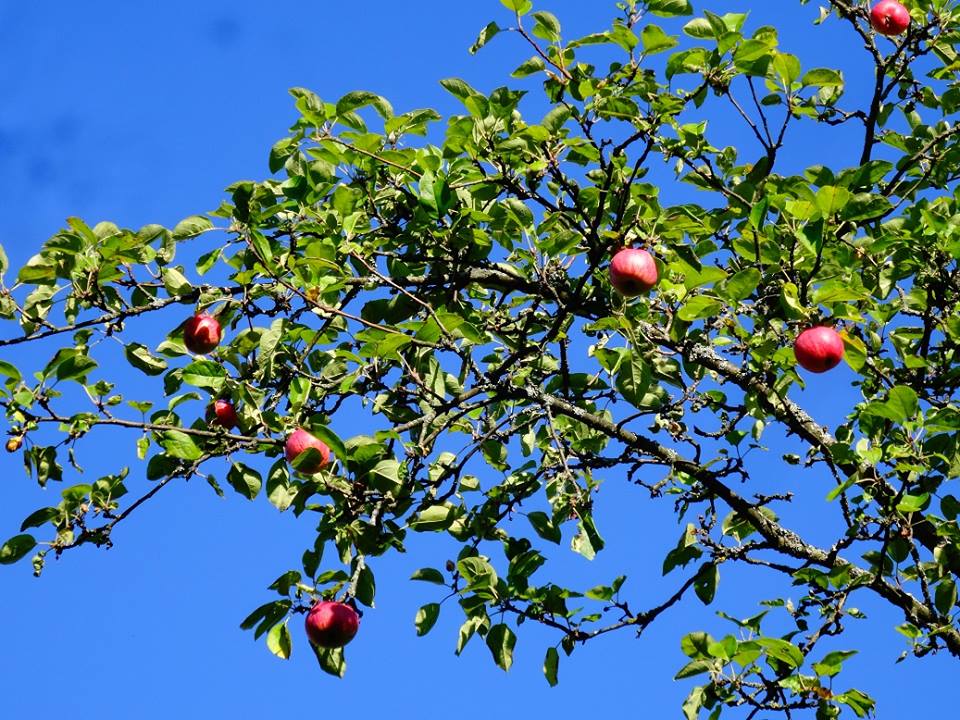 Family friends of mine in Moscow have a Dacha near the birder with Belarus, about a 90 minute drive south from Moscow. Driving out of any of Russia’s cities for more than 30 minutes immediately gets you out into the countryside, and the Russian village way of life immediately takes over.
(more…)
Sabrage – The Best Way To Open Champagne Is With A Sabre
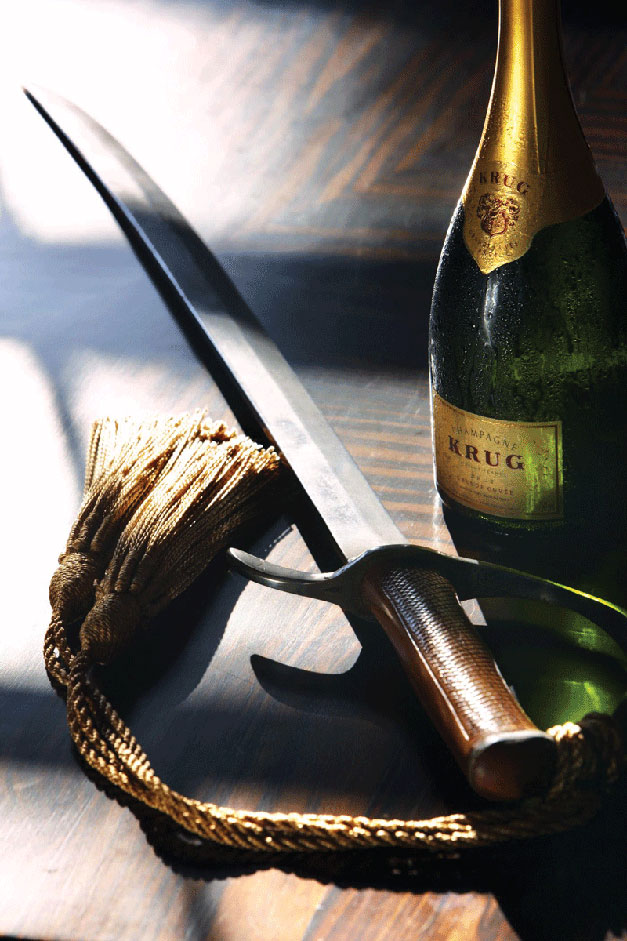 This is something I really want to learn how to do.
The Art of Sabrage is perhaps the greatest legend in the history of Champagne. The story has it that Napoleon Bonaparte’s cavalry, the Hussards, began the Art of Sabrage, a technique to behead a bottle of Champagne with a sabre or sword. When Madame Clicquot entertained Napoleon’s officers in her vineyard, she offered them bottles of Champagne. At sunrise the Hussards rode off on horseback and whipped out their sabres to behead the bottles in order to impress the young widow.
Sabrage however requires technique, or it can go horribly – and painfully wrong.
The Hermitage – Catherine the Great’s Private Theatre
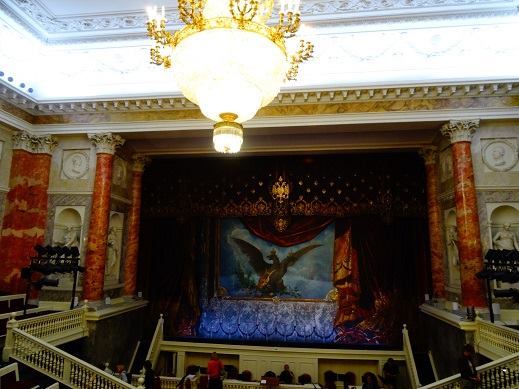
Catherine the Great was a great art lover and was responsible for introducing opera to Russia, hiring many important Italian composers to produce operas specifically for the Court and for consumption throughout the country. The development lineage of opera in Russia is quite unique; the first opera shown in Russia was “Calandro” by Giovanni Ristori and was presented in Moscow in 1731. After that, many Italians, including the renowned Francesco Araja, decamped to St. Petersburg to write operas, in Italian, but featuring Russian motifs. Araja spent 25 years in St.Petersburg and wrote an astonishing fourteen operas specifically for Russia. Many are now lost or forgotten, however Cecilia Bartolli’s recent CD, simply titled “St.Petersburg” which was researched at the Hermitage and Mariinsky archives and documents many of the arias from this period; including some of Araja’s work.
“The Queen of Spades” at the Mariinsky
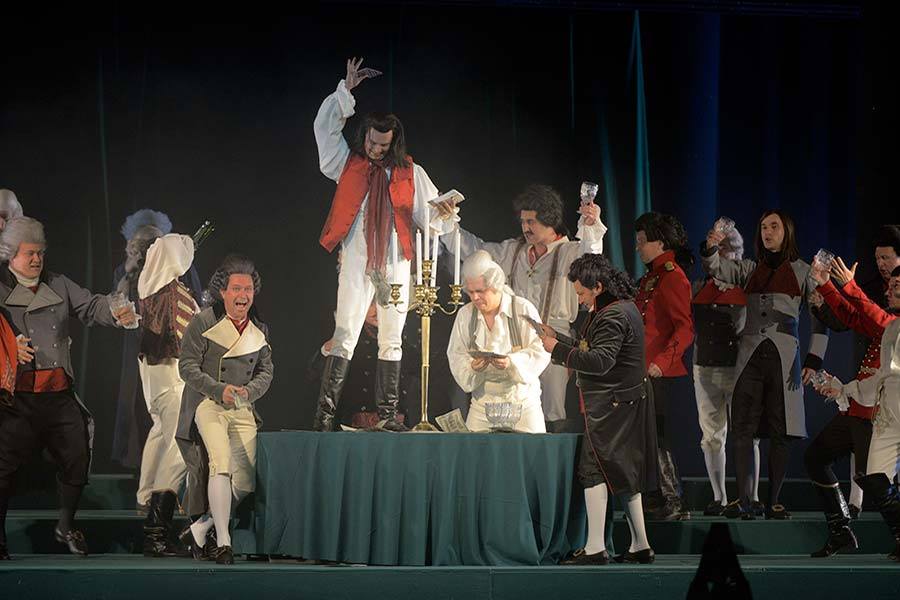 Tchaikovsky’s opera “The Queen of Spades” – after the Pushkin novel, is quite rightly accorded genius status in Russia, yet is only sporadically aired in the West, where audiences seem to prefer the unrequited love angst of Eugene Onegin. Perhaps it needs a Russian maestro and setting to bring out the best of the production, but for me any story that involves ghosts, gambling, a doomed heroine and the disgrace of addiction along with a murder has got to be worth the entrance money.
Prokofiev’s “Love For Three Oranges” at the Mariinsky
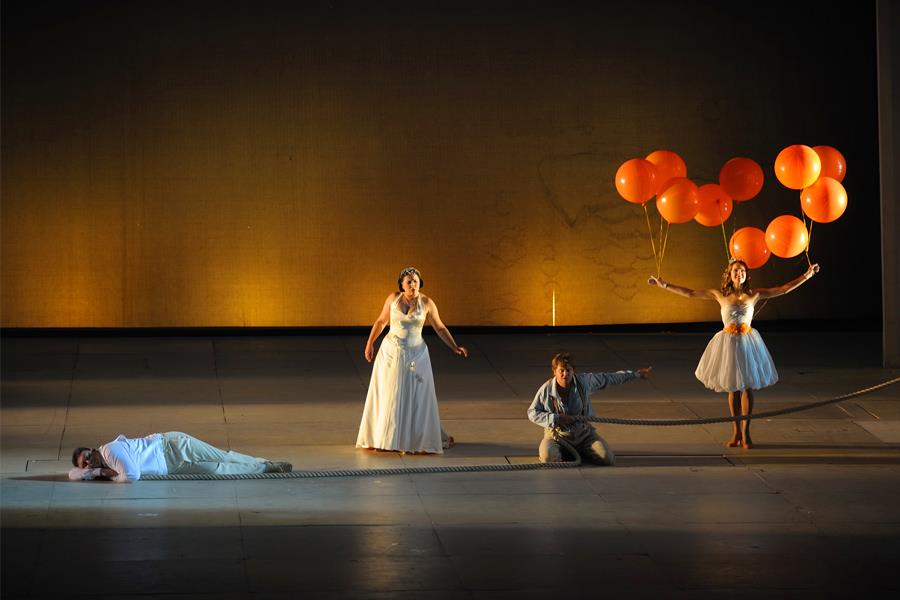 Serge Prokofiev was, along with Dmitri Shoshtakovich, one of the Soviet Union’s greatest composers, and along with his rival possessed a fierce sense of the ridiculous. The 1920s and 30’s were a time for avant garde expressionism and this opera examines this in detail. Princesses being born from Oranges? Silly Marches? It’s almost Pythonesque in its absurd surrealism.
Albina Shagimuratova Recital
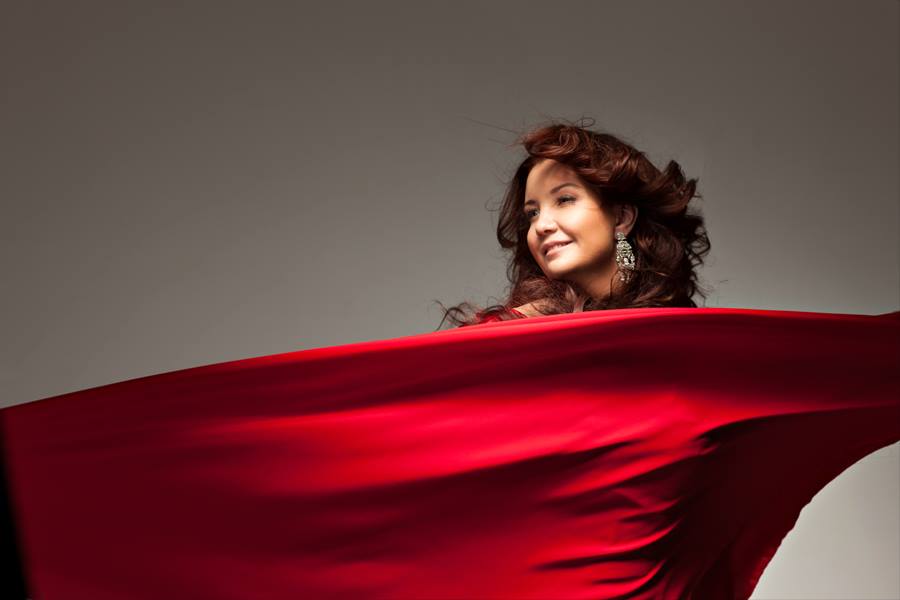 The beautiful Albina Shagimuratova, another up and coming opera singer in an intimate recital tonight, with a set of Arias by Bellini, Donizetti (the ‘mad’ scene from Lucia di Lammermoor) and Romances by Rachmaninov. Again, I find these intimate settings a great leveler, the chance to hear a powerful singer in a more delicate setting – two hands, one voice.