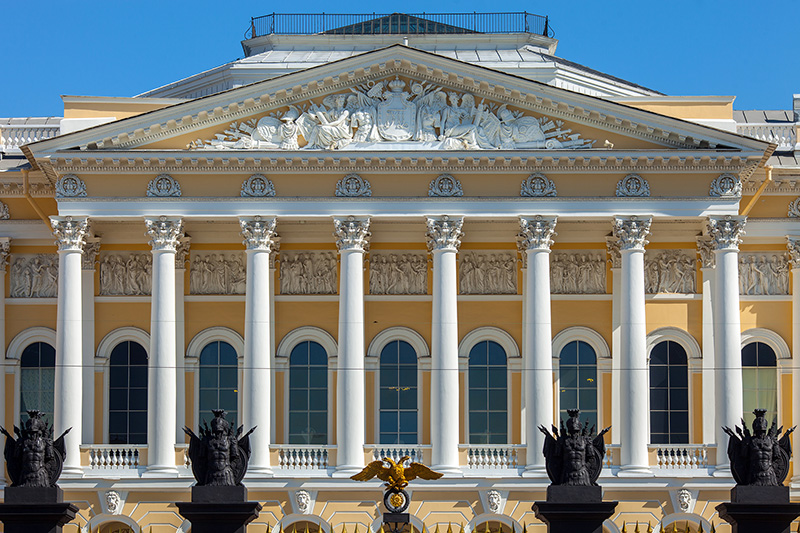
 I have been fortunate enough to be invited to a private New Years Party in St. Petersburg, which is one of Europe’s loveliest cities and probably has the most Palaces. This year, the venue was the Mikhailovsky Palace which handily, is just across the street from my apartment. It was built by Carlo Rossi, the Italian architect whose statue also graces the Square I can look down upon from my balcony, in 1819, with the intention of it being a 21st birthday present for Grand Duke Mikhail Pavlovich. Today, it is the main building of the State Russian Museum, and as such contains a huge amount of important Russian artworks (the Hermitage focuses on foreign art).
First Christmas Snow & The Mariinsky Nutcracker
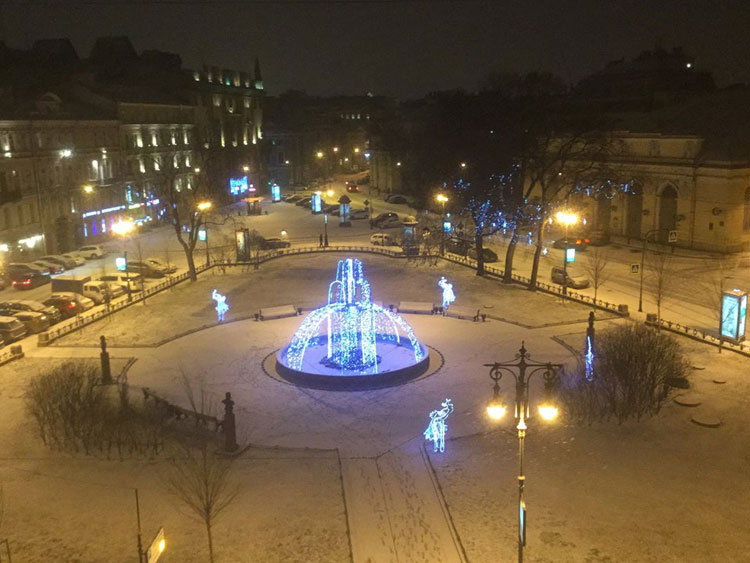 Although I am fortunate enough to be able to live in Malta and Sri Lanka for much of the year, they do both have one serious drawback. They are too warm for Christmas. I’ve tried, and Malta is beautiful at Christmas with all the decorations in this most traditional of Christian countries, while Sri Lanka has its beaches and sunshine. But to feel Christmassy, I need to feel ice, snow, and serious frost. That’s probably because my ancestors were Vikings – I have the typical blood – when I was a child I had red hair, freckles and blue eyes. The eyes remain, although the hair has become whiter (good, it saves me a fortune on getting highlights) and the freckles have long given way to a semi perma tan. But I still need to feel cold, and celebrate Christmas and New Year with snow. If I don’t, I don’t feel right for the entire rest of the year.
The Contemplatative Mediterranean Lifestyle
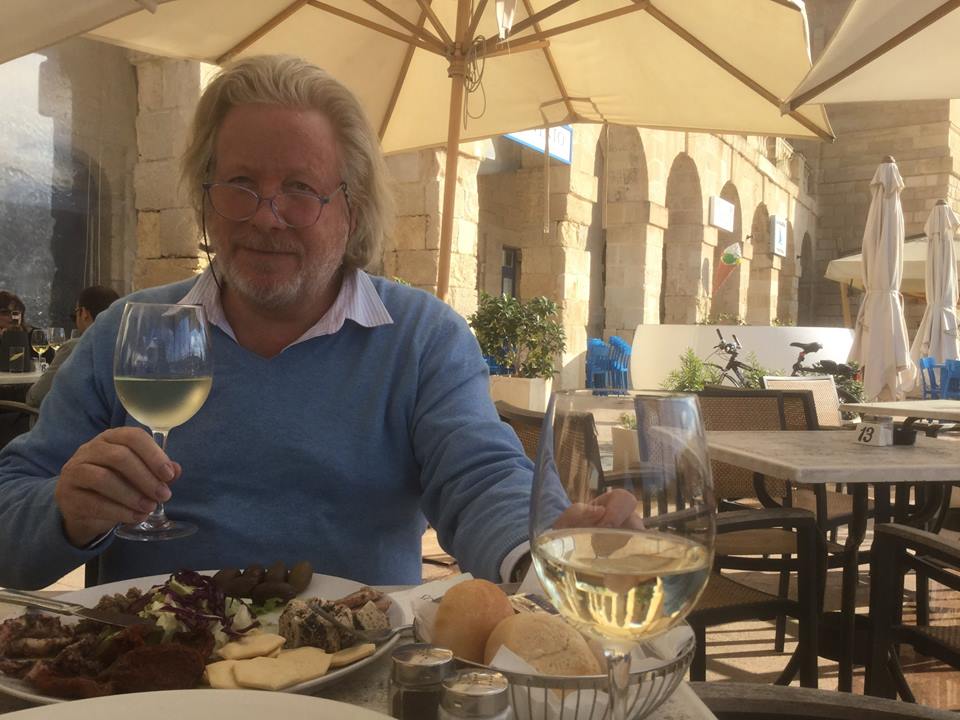 The great thing about Malta is the climate, and although it can get chilly in January/February – about the only months when it can rain – for much of the year the weather is warm,  washed over by sea breezes that temper what would otherwise be a searingly hot barren island.
Coupled with that, the island is surrounded of course by the azure swell of the Mediterranean – meaning sea food is readily available – I’m not a huge meat eater. Add in a proximity to Sicily and the wonderful Sicilian wines, cheeses, vegetables and fruits, the Mediterranean diet is as healthy as can be.
Devonshire-Ellis Malta Residency Granted
 I’ve just collected my Maltese residency card, granted after I’ve made a significant property investment into the country. Â That means I now have a British passport, Maltese and Sri Lankan residency and have shifted my tax base to Malta. As I have also reached the sweet age of 55 that means I can enjoy “white hair” status and effectively reduce my personal income tax to zero – I am paid in dividends that have already had (a lot of)Â tax deducted at source.
(Note: Future 2016 post Brexit Chris comments: In the light of Brexit and the impact of Britain leaving the EU, Maltese residency also grants free EU movement which may no longer be the case with a UK passport)
How To Smoke A Shisha
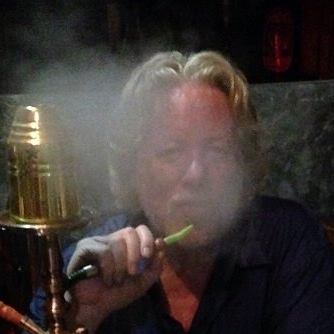
Shisha, the Hubbly-Bubbly, Water-Pipe, Hookah, Bong, Chillem, Argileh…we are all familiar with such devices but how best to indulge? Probably invented and originally using a coconut shell in Persia in the 7th century, (the Persian term for the Shisha is Argileh, derived from the word Nargileh, meaning coconut) its use soon spread throughout India during the Mughal era, and west towards Egypt, Morocco and the Levant. Shisha also have that alluring romance of being used in the past for the consumption of what are now in many countries illegal substances – opium, hashish, and tobacco.
Using a Traditional Samovar & Preparing Tea, Russian Style
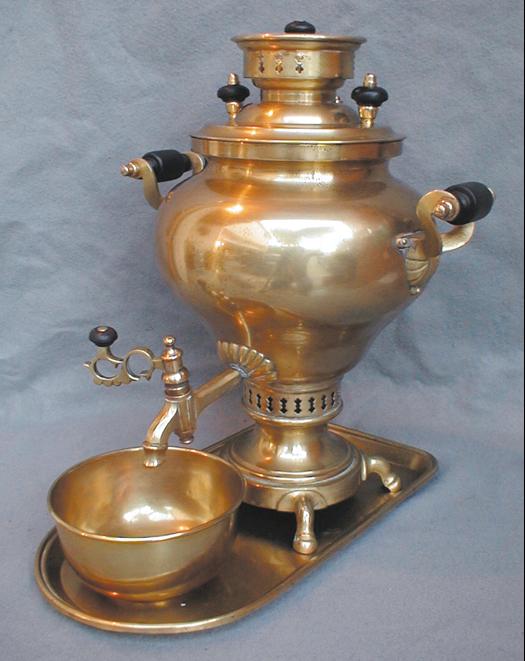 The traditional Russian Samovars are wonderful objects, beautiful in their own right, yet with a specific purpose – brewing water for tea making. The best Samovars were made in Tula, just south of Moscow, with the very best makers displaying stamps that their samovars – all hand made – had won at various international competitions for craftsmanship. Most were made of brass, but it is possible to find samovars made from silver, gold, and even enamel. For obvious reasons, these can be highly valuable, whereas a good quality brass Samovar in working order can still be found for under USD100 on ebay. They are a worthwhile purchase, not because of the increasing scarcity of them -but because they are such fun to use. Imperial era -pre 1917 samovars are the best, and should come complete with matching tray. drip bowl, and a cap. Many also have matching brass teapots that fit neatly on the top.
In Search of Georgia’s Qvevri Wines
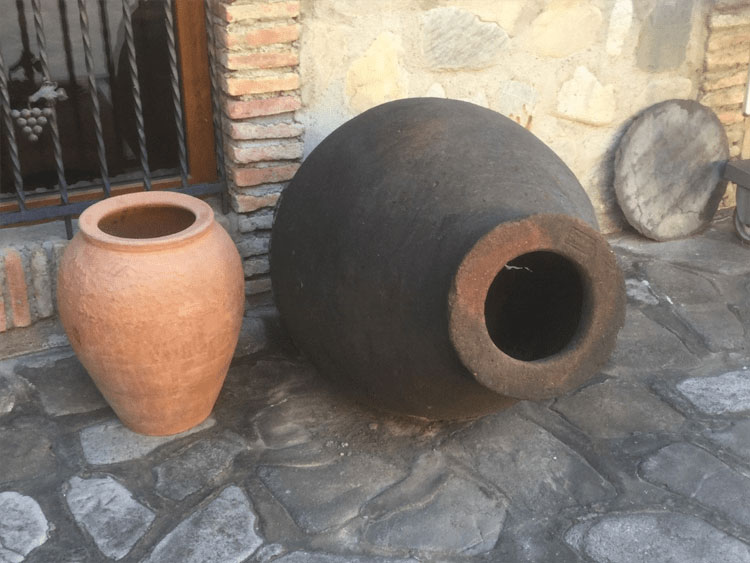 When tracing back the historical background to the production of wine, some of the earliest examples, both in terms of archaeological findings and the written word, hark back to Georgia, in the Caucasus region, and the Qvevri method. I enjoy big tannic reds, and am curious to learn how the extra tannins imparted during the Qvevri process will affect this ancient, and traditional winemaking technique.
Austrian Red Wine, Mozart, Humperdinck’s Witches and Sachers Torte
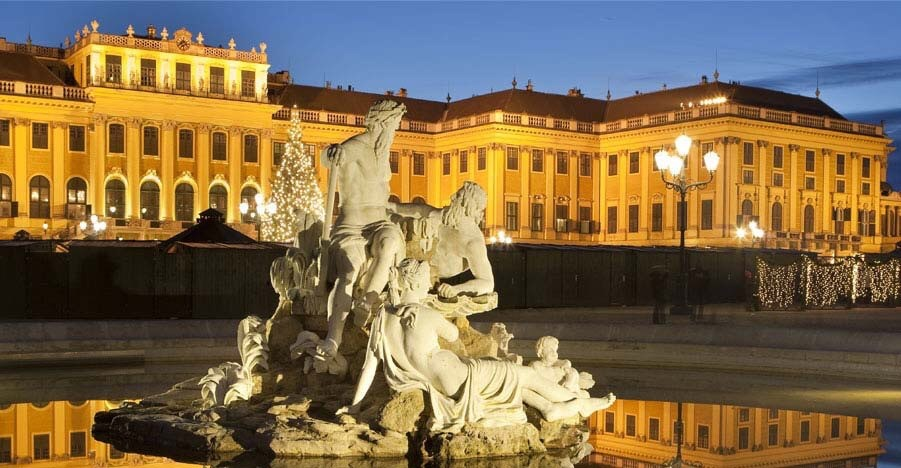
I am in Vienna courtesy of the Austrian Government, who have invited me to speak at a Silk Road conference, looking at investment potential for Austrian companies within China’s great One Road One Belt scheme. My new book, China’s New Economic Silk Road has been well received in Europe, and I am travelling on a mini tour between Vienna, Tblisi and Istanbul to promote it.
The Fastest Way Between Europe & Asia: Moscow-Ulaan Baatar. Plus Baikal & Mongolian Infused Vodkas and September Snow
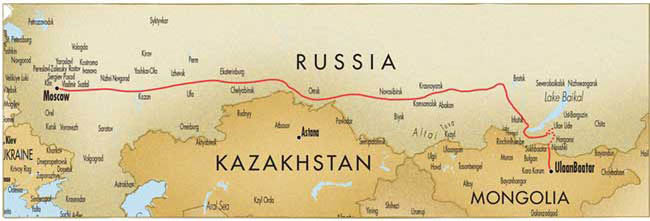
I am fortunate to be able to travel often between St.Petersburg (where I have an apartment) via Moscow to Ulaan Baatar (where I have an apartment). In actual fact I have discovered that this route is also the most convenient and quickest to get from Europe to Asia. It is a five to six hour (depending on time of year and jet streams) Aeroflot jaunt from Moscow to UB, both being so far north the plane is literally flying across the top of the world. In fact by the time the flight reaches Ulaan Baatar, it is closer to the United States (Alaska) than Moscow.
Chris Devonshire-Ellis’s New Book About China’s One Belt One Silk Road
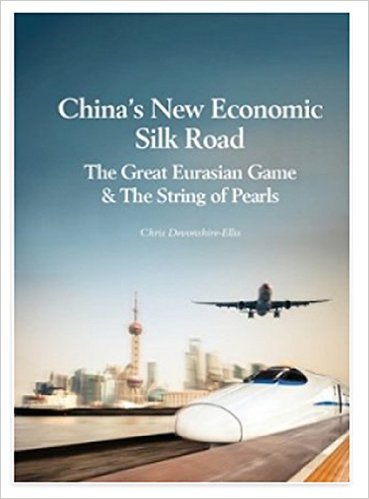 My new book about China’s Silk Road ambitions has just been published, fortunately to great reviews. It’s what I’ve been working to complete all summer, although its actually taken a full 12 months to put together. The book contains trade and demographic details of all 60 countries participating in the project, as well as details of Chinese funding for the scheme, complete overviews of the overland and maritime routes, and the potential logistical bottlenecks to developing road, rail and sea links.
For example, China’s desire to have hi-speed rail all the way from Shanghai to Singapore will never get off the ground if Thailand and Malaysia cannot agree to develop the rail routes between Bangkok and KL. That is a lucrative airline route and interested parties don’t want competition. Likewise, upgrading Vietnams rail system to hi-speed will cost 50% of the countries GDP. So much needs to be done…