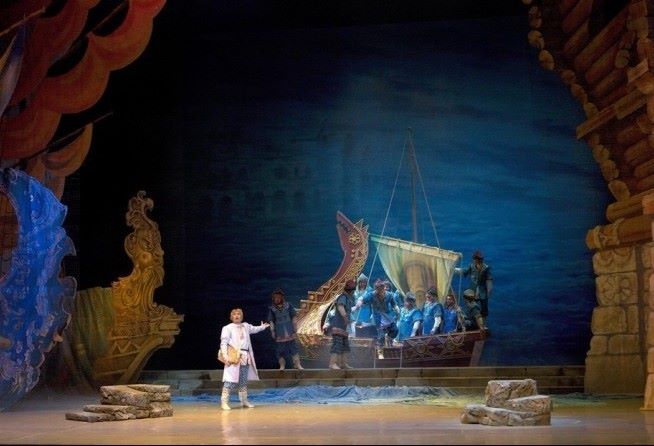
Sadko and his band of travelling merchants en route to Venice.
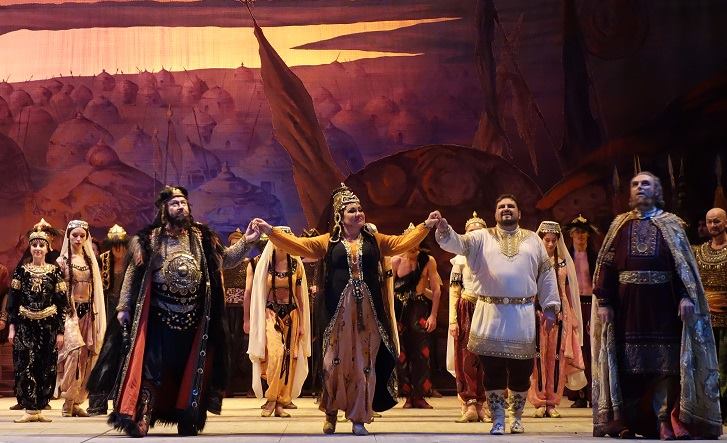
Rimsky-Korsakov’s fairy tale opera “Sadko” at the Mariinsky last night. Telling the tale of Sadko, a down beat Minstrel who is bewitched by the Sea Princess, forgets his wife and goes on adventures to find his fortune. After 12 years away and becoming rich, he is summoned to marry the Sea Princess under the waves, and nearly does so before Neptune intervenes – after all, Sadko is married. The Princess is turned into the River Volkova as punishment and Sadko wakes up on a lonely beach, only to find his broken-hearted wife searching for him. He thinks its all a dream until he finds his crew have safely returned and he is now the richest merchant in Novgorod. Moral: Try for your dreams.
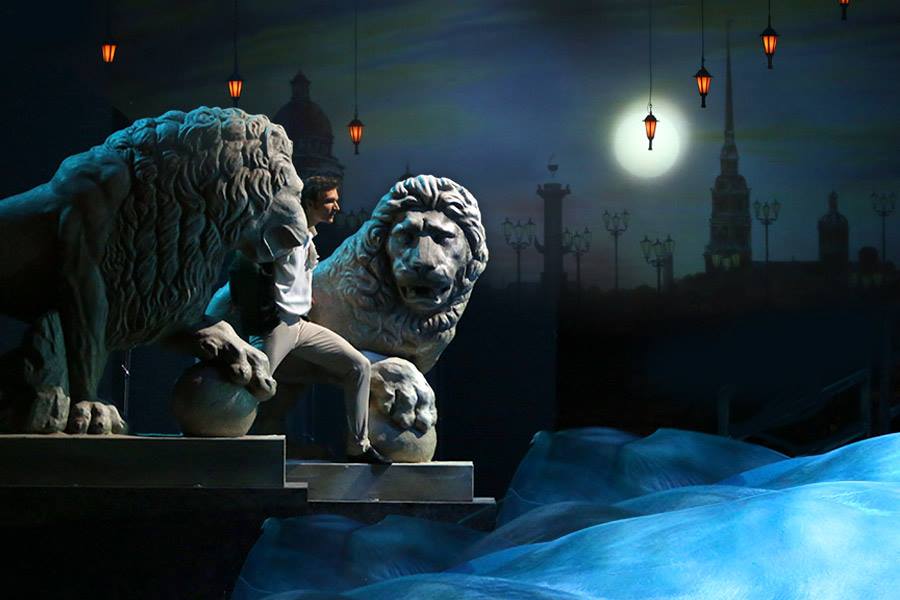

 As is my tradition, I spend New Years Eve and the Orthodox Christmas (January 7th) is Russia, usually at my St. Petersburg apartment. The Russians celebrate New Year with enthusiasm just as everyone else does, and unless I get my annual share of winter snow, icy temperatures and that feeling of Christmas spirit at this time, I don’t feel quite right for the next twelve months. A cold traditional Christmas has become rather more than an annual celebratory event, it has become a necessity.
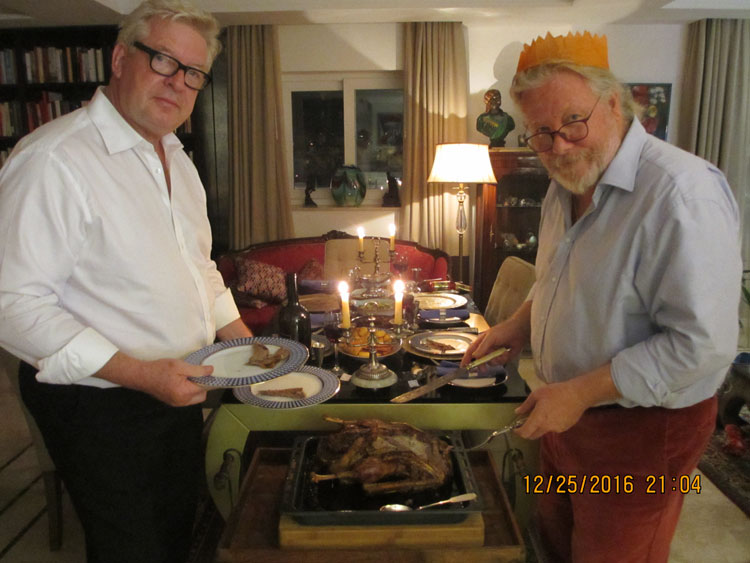 Ingredients:
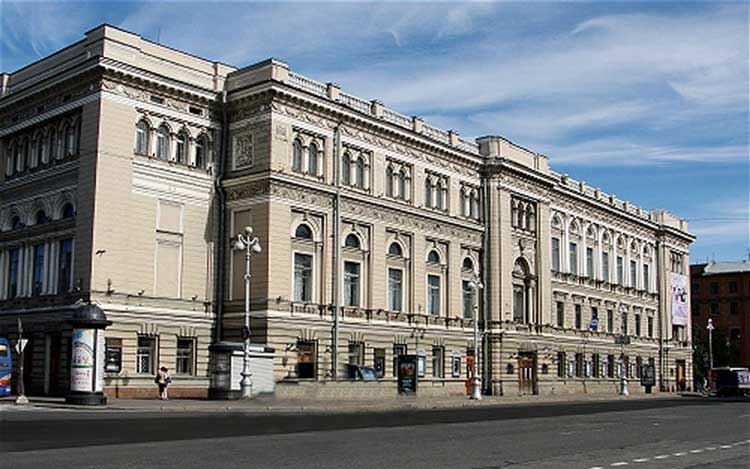 Next year is the 135th anniversary of Stravinsky’s birth, so it is entirely appropriate that a piece long thought lost during the Russian revolution has been found. There is a ‘missing link’ between Stravinsky’s earlier work, exemplified by “
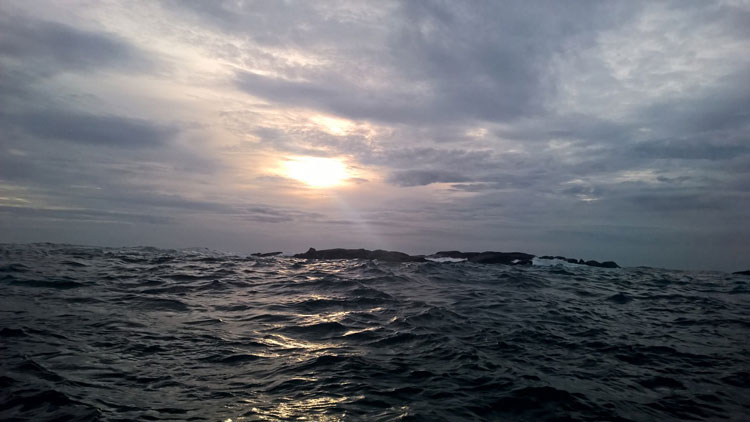 I’m back to Sri Lanka for the Winter months, and what better way to re-acquaint myself with the local scenery than spend a few hours out fishing. I have nothing in the larder, the cupboard is bare after months spent in Europe, so I really do need to fish for my supper.
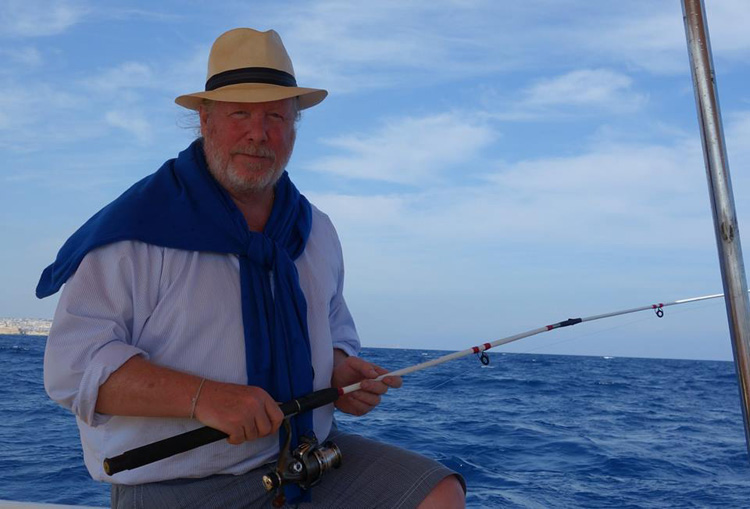 I love living near the sea; Malta of course is a Southern European Island nation right in the centre of the Mediterranean, while I also have my
 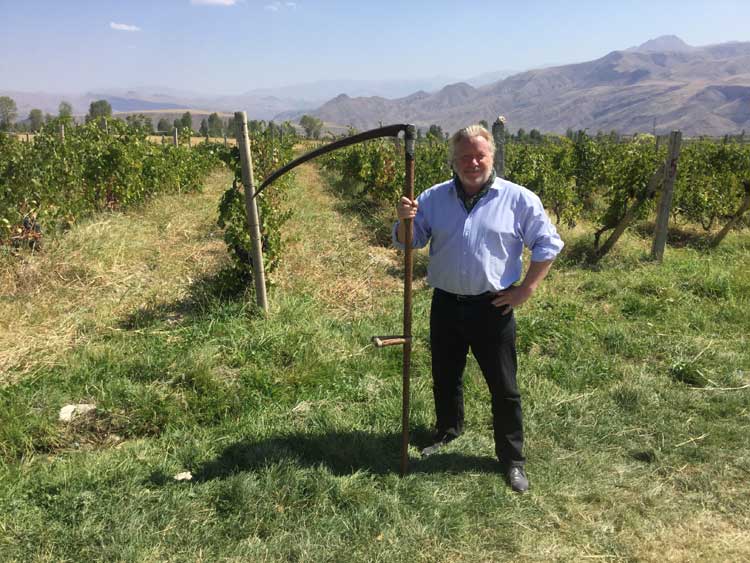 I’m very taken with the potential for, and investing in a Vineyard in the Caucasus, and have taken a trip across the border driving down to Armenia. It’s a seven hour drive between Tbilisi and Yerevan, and we arrive late in the afternoon. The next morning we are off early to visit vineyards possibly suitable for development in Veghegagadzhor, in the Areni region of Armenia. This is where the best wines in Armenia are said to come from.